
Skip to content

Five signs your infrastructure is built for peak moments—and five signs it isn’t 

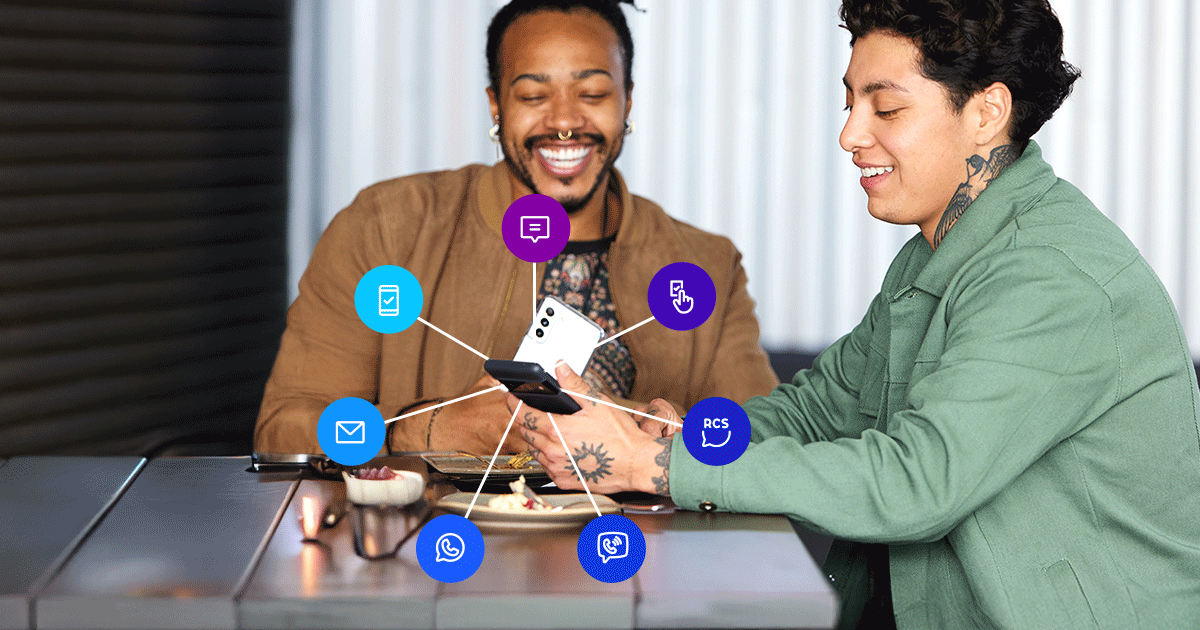
Throughout this series, we’ve explored what peak readiness actually requires: identity infrastructure that adapts under pressure, customer communications that operate as core systems, and scalability defined by consistency rather than raw capacity.   What organizations often learn the hard way is that these capabilities don’t operate independently. During a mega global event, identity decisions rely on real-time communication signals. Communications rely on scalable delivery infrastructure. Fraud

The scalability question most teams are asking wrong 

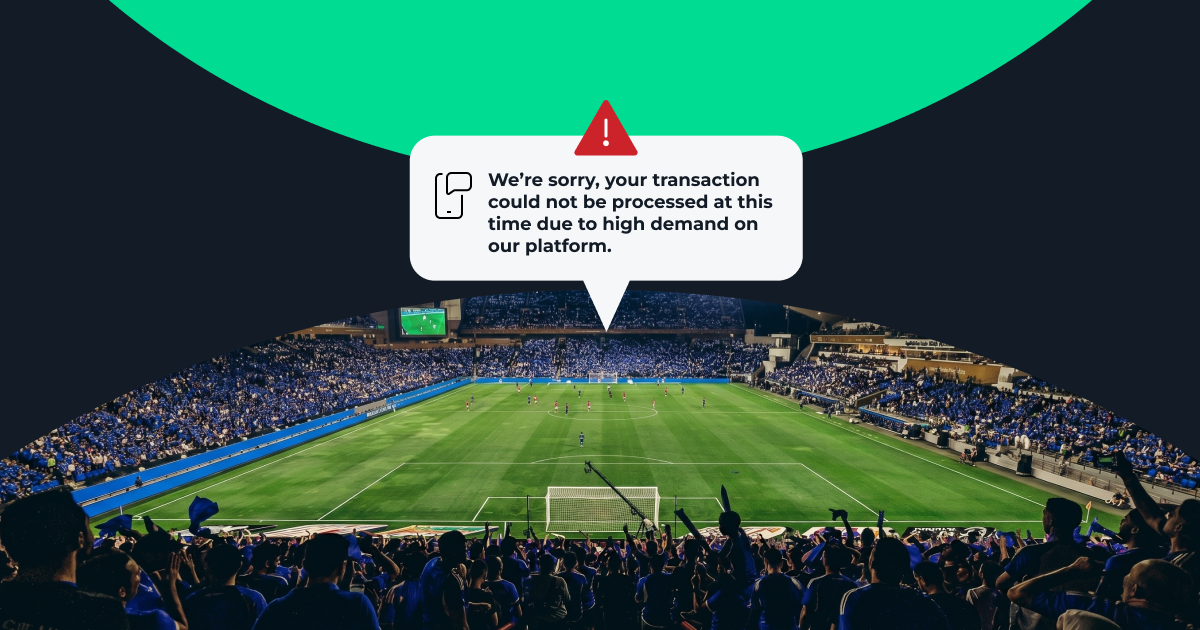
Before a major peak event, the question most organizations ask is some version of: can our systems handle the load?   It’s a reasonable question. Teams run load tests, provision capacity, and push thresholds to their limits. By the time peak arrives, there’s a level of confidence that the infrastructure will hold.   Then the event arrives. Traffic surges. Not in the

When millions are watching, every message matters 

Picture the moment a customer completes a high-stakes transaction during a major global event. They’ve just booked flights for an international trip, purchased limited-edition merchandise, or placed a bet on the outcome of a match that billions of people are watching.   Now picture what happens next: nothing. No confirmation message. No authentication prompt. No update. Just silence—while they refresh,

Peak moments don’t break systems. They reveal them.  

Every organization has infrastructure that performs fine on an average Tuesday. Predictable traffic. Familiar patterns. Enough headroom to absorb the occasional spike. Then a mega global event happens. Millions of customers simultaneously book, buy, log in, and transact. Traffic surges and fraud attempts multiply. Messaging volumes hit levels that most platforms have never seen outside of a

AML compliance: How phone number verification strengthens modern anti-money laundering programs  

Anti-money laundering (AML) compliance is a foundational requirement for organizations operating in regulated industries. As financial services, gaming, and digital platforms increasingly move online, regulators expect businesses to detect, mitigate, and report suspicious activity across fully digital customer journeys.  At the same time, identity verification has become more complex. Fraudsters now rely on synthetic identities, disposable phone numbers, and automated sign-ups

A comprehensive guide to the KYC onboarding process 

As digital threats grow and regulations tighten, businesses can no longer afford to treat compliance as an afterthought. In 2024 alone, global financial institutions were fined over $4.6 billion for failing to meet Anti-Money Laundering (AML), Know Your Customer (KYC), and Customer Due Diligence (CDD) compliance standards, with the U.S. alone accounting for more than

What is identity proofing? A guide to smarter digital verification 

As fraud techniques evolve and digital onboarding becomes the standard, verifying customer identities has become a foundational requirement for both compliance and trust.   Identity proofing plays a critical role in today’s digital economy, helping businesses secure platforms, reduce risk, and create seamless, secure customer journeys.  This guide explores what identity proofing is, why mobile-first

Security-conscious leadership: Embedding cybersecurity into corporate DNA 

As digital fraud becomes more sophisticated and AI accelerates the speed and scale of threats, companies must adopt a new mindset. Security is not simply an IT function; it’s a leadership responsibility.  The Telesign 2025 Predictive Insights Report sheds light on a critical shift happening in boardrooms and workrooms across industries: the rise of security-conscious

Number deactivation and the recycled phone number dilemma

As digital services continue to grow, businesses are increasingly relying on phone-based verification and two-factor authentication (2FA) to safeguard user accounts. These methods are not only user-friendly—they’re also highly effective in confirming a person’s identity through something nearly everyone has: a mobile phone number.  With 2FA, a phone number becomes the “second factor,” providing an

Tackling evolving threats with smarter cybersecurity investments 

Cybercrime is no longer just a looming threat—it’s a global crisis with escalating costs that businesses can’t afford to ignore. In 2025, the financial burden of cybercrime has reached unprecedented levels, with projections estimating it will hit $13.82 trillion by 2028. This sharp rise signals a pivotal moment for organizations: it’s time to rethink cybersecurity

Prioritizing trust in 2025: How brands can strengthen customer confidence 

Trust has always been a pillar of strong customer relationships. With 62% of consumers stating that trust is critical when choosing to engage with a brand, it is fast becoming a defining factor for consumer engagement and loyalty. At the same time, the digital landscape is becoming more complex, with AI-generated scams and fraud creating

Identity verification API usage: A comprehensive guide 

A business must be able to establish certainty around the validity and authenticity of digital interactions to protect itself and its users. With a threat environment that grows more complex every day, risks such as account takeovers and identity theft are on the rise. A reliable, secure method to verify user identity is a must-have