

MICROSOFT ENTRA ID SMS AND VOICE CONTINUITY
You still need OTP. The cutoff is close. Choose a provider built for security.
If users or workflows will still require SMS or voice after Microsoft-provided delivery ends on February 1, 2027, choose a partner that does more than deliver a code. Telesign combines real-time risk intelligence, carrier-grade SMS and voice, and proven identity-platform experience to help you move from provider selection to tested rollout.
Telesign’s infrastructure runs on Azure and is eligible to count toward your Azure Consumption Commitment (MACC).
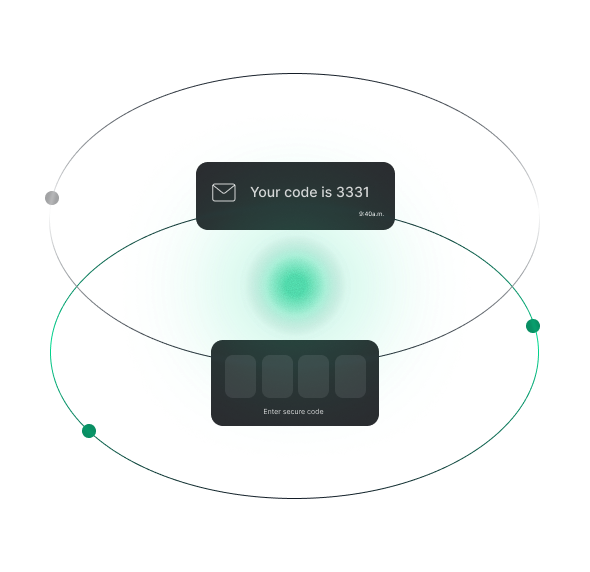
Entra ID continuity plan
Risk analysis before send
Carrier-grade delivery
Pilot-ready path
FOR MICROSOFT ENTRA PARTNERS
Protect your customers. Grow your Entra business.
Help customers prepare for Microsoft’s SMS and voice delivery retirement while strengthening your identity relationship. Where customers still need OTP, turn the Microsoft Security Store provider transition into project revenue, recurring resale margin, or both with Telesign.
THE DECISION WINDOW
Every week lost is less time to test
Provider selection is only the first step. The remaining window must cover contracting, configuration, risk controls, routing tests, user validation, support readiness, and phased rollout before February 1, 2027.
A late decision can turn a planned transition into blocked users, failed authentication, service-desk pressure, and an avoidable rush to production.
Select early
Align Security, IAM, IT, Procurement, and Support around one provider decision while there is still time to evaluate the complete operating model.
Test the complete journey
Validate risk decisions, SMS and voice delivery, failure handling, delivery responses, support escalation, and the user experience before production.
Roll out in phases
Start with representative users, resolve issues, then expand with clear monitoring, support, and rollback plans.
WHY TELESIGN
Choose more than a basic OTP delivery route.
Once a customer-managed provider sits in the authentication path, it becomes part of the security control and the access experience. The right partner should help assess risk before send, detect artificial traffic, route OTPs reliably, reach users globally, and support the transition into production.
Telesign brings risk intelligence, direct carrier connectivity, resilient SMS and voice delivery, and identity-platform experience into one continuity solution.
01
Security
Analyze risky numbers and suspicious behavior before an OTP is sent.
02
Delivery
Use direct carrier routes, waterfall failover, cleansing, and traffic monitoring.
03
Operations
Combine global reach, implementation support, and proven telephony-transition experience.
SECURITY BEFORE SEND
Assess OTP risk before the code is sent
Telesign applies real-time risk analysis and phone intelligence around the OTP journey, helping teams move beyond a send-every-request model.
One large fintech customer estimated more than $1 million in annual account-takeover fraud savings after two months of Telesign SIM-swap monitoring.
Source Telesign Verify Plus, Intelligence, IRSF, Phone ID, and SIM Swap materials.
-
01
Verify Plus
Risk-based verification
Verify Plus evaluates phone-number velocity, traffic patterns, phone attributes, and fraud databases in milliseconds. Based on the risk, the OTP request can be allowed or blocked before the code is sent.
-
02
Intelligence
Detect pumping and IRSF
Telesign Intelligence analyzes anomalous traffic, usage velocity, number ranges, carrier data, and phone attributes to identify suspicious activity. It helps detect suspicious traffic associated with SMS pumping and International Revenue Share Fraud (IRSF), which can drive significant financial and operational exposure.
-
03
Phone ID and SIM Swap
Detect suspicious changes
Phone ID provides device, carrier, and subscriber signals. SIM Swap shows whether and when a SIM changed and assigns a fraud-likelihood risk level, helping teams decide when to step up verification or block authentication when recent changes are suspicious.
CARRIER-GRADE CONTINUITY
Secure OTP only works when legitimate users receive it
Telesign combines direct carrier connectivity, dynamic routing, number cleansing, traffic monitoring, delivery status, and global voice reach to support service continuity.
High-quality SMS delivery
Telesign uses 700+ direct-to-carrier network routes and a waterfall approach across multiple paths to improve delivery speed, reliability, and completion. SMS Verify reaches 97% of the world population across 230 countries and more than 80 languages.
Advanced phone-number cleansing
Telesign corrects numbers against local and international dialing rules before delivery. The capability can improve SMS deliverability by more than 10% in most markets while reducing failed and unnecessary sends.
Voice OTP for broader reach
Telesign Voice delivers secure OTP over the BICS network across more than 230 countries and territories, including landlines and users without dependable mobile data. The network includes more than 120 optimized points of presence and more than 700 direct-to-carrier routes.
Implementation and operational support
Delivery responses, optional status callbacks, 24x7 support, and dedicated technical guidance help teams test, monitor, and operate the service with confidence.
FROM DECISION TO ROLLOUT
Move from provider choice to tested continuity
Telesign experts can help your team structure the transition around the users who still need OTP, the controls that protect them, and the operating steps required for production.
01
Confirm the continuity scope
Define the users, workflows, countries, SMS and voice needs, volumes, and security requirements that remain after the passkey transition.
02
Configure and validate
Align sender IDs or caller IDs, templates, risk thresholds, delivery responses, callbacks, and test cases across the complete authentication flow.
03
Pilot and phase the rollout
Test with representative users, validate failure and support scenarios, resolve issues, and expand production with clear monitoring and rollback plans.
BUILD A JOINT CUSTOMER PLAN
You lead the customer. Telesign strengthens the OTP layer.
Keep your role as the identity advisor, implementation lead or reseller. Bring Telesign into the customer’s telecom-provider planning so customer ownership, delivery responsibilities, and support are clear from the start.
Your role: lead the customer program
Assess sign-in and self-service password reset, validate where SMS or voice remains necessary, and plan B2B and guest populations separately. Lead Microsoft Security Store provider selection, Entra configuration, testing, communications, and managed support
Telesign’s role: support delivery and protection
Telesign brings SMS and voice OTP delivery, direct carrier connectivity, failover, number cleansing, and technical support. For additional protection, Telesign Intelligence, Verify Plus, and Phone ID with SIM Swap can help identify risky requests, artificial traffic, and suspicious SIM changes.
Identity-platform experience across Okta telephony, PingOne Bring Your Own Telephony, and PingOne DaVinci risk orchestration.
Start with a customer whose Entra sign-in or password-reset workflows still rely on SMS or voice. Together, define the remaining OTP need, your delivery or resale model, and the next step toward tested continuity. Start now to leave time for validation and rollout.
BEYOND THE CUTOFF
Protect continuity now. Build a stronger verification mix next.
Backed by Proximus Global, Telesign reaches more than five billion subscribers, secures more than 180 billion transactions annually, and connects more than 1,000 destinations. Verify API provides a path beyond SMS-only authentication through seven channels, custom routing, and multichannel fallback.
Salesforce
Selected Telesign for the scale needed to support its expanding global footprint.
HomeAway
Credits Telesign's waterfall delivery, global network, and traffic monitoring with improving delivery rates and reducing call-center volumes.
Patelco Credit Union
Used voice to reach members regardless of phone type or data connectivity, supporting member satisfaction and online-banking adoption.
Frequently asked questions
What teams ask before they switch providers
Are you recommending SMS or voice instead of passkeys?
No. Passkeys or another phishing-resistant method should remain the primary path for most users. Telesign supports the validated populations and workflows that will still require SMS or voice after Microsoft-provided delivery ends.
Why choose Telesign instead of a basic SMS or voice provider?
The provider becomes part of the security and access experience. Telesign combines risk analysis, fraud intelligence, phone-number signals, direct carrier connectivity, resilient routing, global voice, and implementation experience rather than offering code delivery alone.
How does Telesign assess OTP risk before it is sent?
Verify Plus evaluates velocity, traffic patterns, phone attributes, and fraud databases in milliseconds before allowing or blocking the OTP request. Phone ID, SIM Swap, and Intelligence provide additional signals for risky numbers, suspicious changes, and anomalous traffic.
How does Telesign address traffic pumping and IRSF?
Telesign Intelligence analyzes anomalous traffic, number velocity, number ranges, carrier information, and phone attributes to identify artificially inflated traffic and International Revenue Share Fraud (IRSF). High-risk requests can be flagged or blocked before unnecessary messages or calls are generated.
How does Telesign improve SMS and voice continuity?
Direct carrier routes, dynamic waterfall routing, advanced phone-number cleansing, traffic monitoring, delivery responses, and global voice reach help legitimate users receive OTPs quickly and reliably while reducing avoidable failures.
What do the Okta, PingOne, and DaVinci integrations demonstrate?
They demonstrate practical experience moving identity-platform customers to customer-managed telephony and risk-aware authentication. Telesign supports Okta telephony and PingOne BYOT, powers PingOne risk-based authentication, and provides a DaVinci connector that can bring mobile risk signals into orchestrated journeys.
Can Telesign support a broader verification strategy after the cutover?
Yes. Verify API unifies SMS, Silent Verify, Push, Email, WhatsApp, RCS, and Viber through one API. Custom routing and multichannel fallback allow the authentication mix to evolve by market, risk, cost, and user preference.
Passkeys should lead. Telesign protects users who still need OTP.
Keep required SMS and voice authentication secure, reachable, and ready for what comes next with risk intelligence, carrier-grade delivery, and proven identity-platform experience.

Thank you
Your submission has been received.